 Pathway Prep
Every test date, I get a handful of the same questions from families: paper or online? Do we need science? What about writing? If you're sitting on the act.org registration page trying to figure out what to click, here's exactly how to work through it, screen by screen.
1. Create your MyACT account
Every family needs a MyACT account to register for a Saturday national test date. The one exception is the free, official test that Kansas and Missouri public schools give during the school week, usually sometime in February, March, or April. That's the only test date where you won't register yourself.
Before you start, ACT tells you what you'll need: about 10 minutes, a credit card (or voucher or fee waiver), your student's photo, and their grades if they want to add them. That last one's optional.
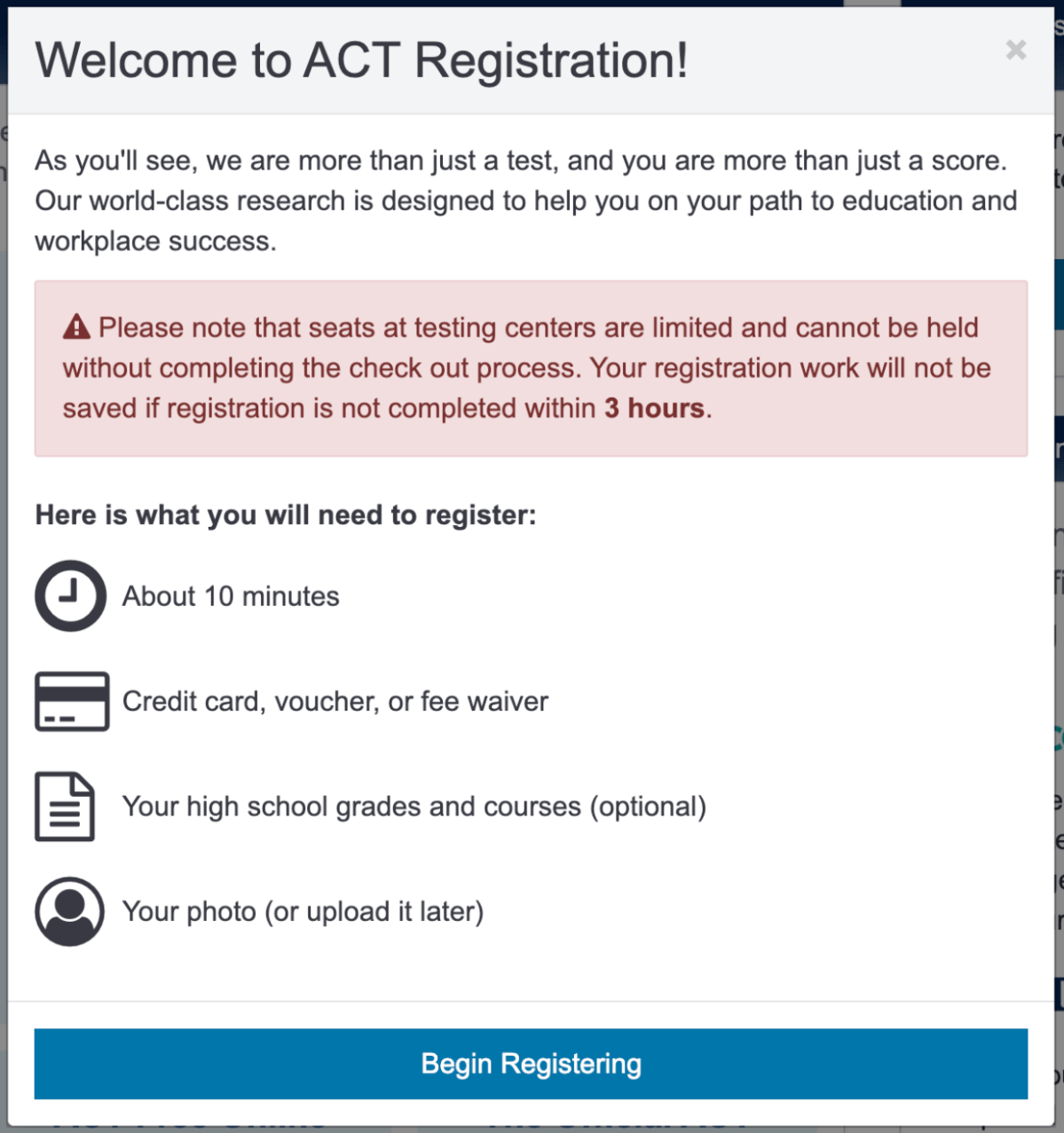
One thing worth knowing up front: your work isn't saved if you don't finish within 3 hours. Don't start this in the middle of a busy evening if you're likely to get pulled away.
2. Request accommodations, if you need them
If your student has a disability that requires accommodations, or needs English Learner supports, this is where you say so. It has to happen during registration. If your student has been approved for accommodations before and wants to use them again, make sure to select "Yes, Accoms/Supports Needed" so your registration doesn't get held up for confirmation.

3. Choose paper over computer
You'll be asked to choose a testing format. It's true that ACT has been rolling out online, computer-based testing over the past couple of years. However, the ACT is designed to be taken on paper. The digital version takes longer to write out math work, involves too much scrolling on reading/science, and makes elimination harder despite the provided tool. You'll also generally find more testing sites available for paper.

4. Decide on science
This is where most of the confusion comes from. It's true that the ACT required a science section for years. However, that changed in fall 2025. Science is now optional, and it no longer factors into your composite score. It's been a full year since that change, and most colleges now don't require or even recommend a science score anymore.
My recommendation: select "ACT, no science" unless you have a specific reason not to.

5. Decide on writing
Writing has been optional for as long as most families have been dealing with the ACT, and that hasn't changed. Almost no colleges look at it. Select "ACT, no writing" unless you have a specific reason to add it.

An add-on worth knowing about
Partway through, you'll see an option to add PDFs of the test booklet, answer document, answers, answer key, and score conversion tables for $34. This is the My Answer Key (MAK) package. The ACT only releases answers on MAK dates: Oct, Apr, Jun, and sometimes Dec. It’s usually worth the cost, especially later in the test prep process if practice test scores aren't matching with real test day scores.

6. Finish registering
Once you've made these choices, available testing sites near you will show up automatically. Pick one, pay the fee, and you're done. Registration deadlines come earlier than you'd think, often five to six weeks before the test date, so don't wait until the last minute to lock this in.
Bonus: Upload a photo now
Your student must have a photo on their profile in order to be able to take the ACT. The submission deadline for that is generally 8 days before (the Friday prior). They do send an email, but I’ve seen several families miss this step and miss the exam. Do it right after registration so you don’t forget.
Already registered?
If you've already gone through this for an upcoming test, you don't need to change anything. These are just my general recommendations, not requirements.
Questions?
Registration trips up almost every family the first time through, especially with the science change still being new to a lot of people. If you get stuck or aren't sure which option fits your student, reach out and I'm happy to help you work through it.